Did Benjamin Franklin start Daylight Saving Time? The U.S. government extended it to eight months in 2007 (March to November). At one time the government said it saved energy. But that theory is not holding up anymore. Indiana found that we use more energy during daylight saving time. Was it Ben Franklin’s humorous essay-letter, An Economical Project that started it all?
In 1784, Benjamin Franklin published a whimsical letter in the newspaper. As a joke. It was humor. Benjamin Franklin did not propose that we change the clocks and change the time. He was making an opinion piece about the people of Paris.
According to Ben Franklin, he was watching a demo of the new oil lamps, when some of the people questioned whether the cost of the oil was worth the amount of the light.
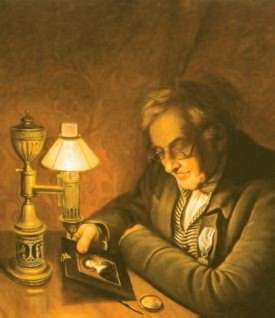
Argand oil lamp 1780
Franklin then explains that after retiring to bed at 3 or 4 in the morning, he was awakened by a sudden noise at 6 am, and was surprised to find light pouring in through his open window shutters. At first, he thought it might be those new oil lamps. But, low and behold, peering out the window, he discovered it was the sun on the horizon. Shocked, he checked the almanac, and sure enough, he found the sun to rise at that hour, and that it continued to do so a little bit earlier each morning through June.
“Your readers, who with me have never seen any sign of sunshine before noon…will be as much astonished as I was, when they hear of [the sun] rising so early; and especially when I assure them, that it gives light as soon as it rises. I am convinced of this.”
He then goes on to say, that he (along with the rest of Paris) would have slept until noon–through 6 hours of good sunlight. And then living 6 hours the following night by candlelight. He proposed that the people of Paris (who slept til noon) should arise earlier to take advantage of the “free” daylight. This would save money in candles. Franklin also proposed that as soon as the sun rises, church bells go off, and then if that is not enough, a cannon too. A tax be laid on every house with shutters to keep the light out, candles rationed to one pound per family…

Later, he noted in his autobiography,
“I observed there was not one shop open tho it had been daylight and the sun up above three hours — the inhabitants of London choosing voluntarily to live much by candlelight and sleep by sunshine, and yet often complaining a little absurdly of the duty on candles and the high price of tallow.”“Oblige a man to rise at four in the morning, and it is probable he will go willingly to bed at eight in the evening.”

Franklin suggested that the people of Paris (who slept til noon) should arise earlier to take advantage of the “free” daylight. This would save money in candles.
He also said that as soon as the sun rises, and church bells go off — then if that is not enough, a cannon too. A tax be laid on every house with shutters to keep the light out, candles rationed to one pound per family…
“Oblige a man to rise at four in the morning, and it is probable he will go willingly to bed at eight in the evening.”
Later, he noted in his autobiography, “I observed there was not one shop open tho it had been daylight and the sun up above three hours — the inhabitants of London choosing voluntarily to live much by candlelight and sleep by sunshine, and yet often complaining a little absurdly of the duty on candles and the high price of tallow.”